William Wauer and the Berlin Cubism
The plastic arts around 1920
10. April 2011 – 19. June 2011


‘The Berlin sculptor William Wauer was the first in Europe to create pure cubist sculpture.’ (Rudolf Blümner, 1921)
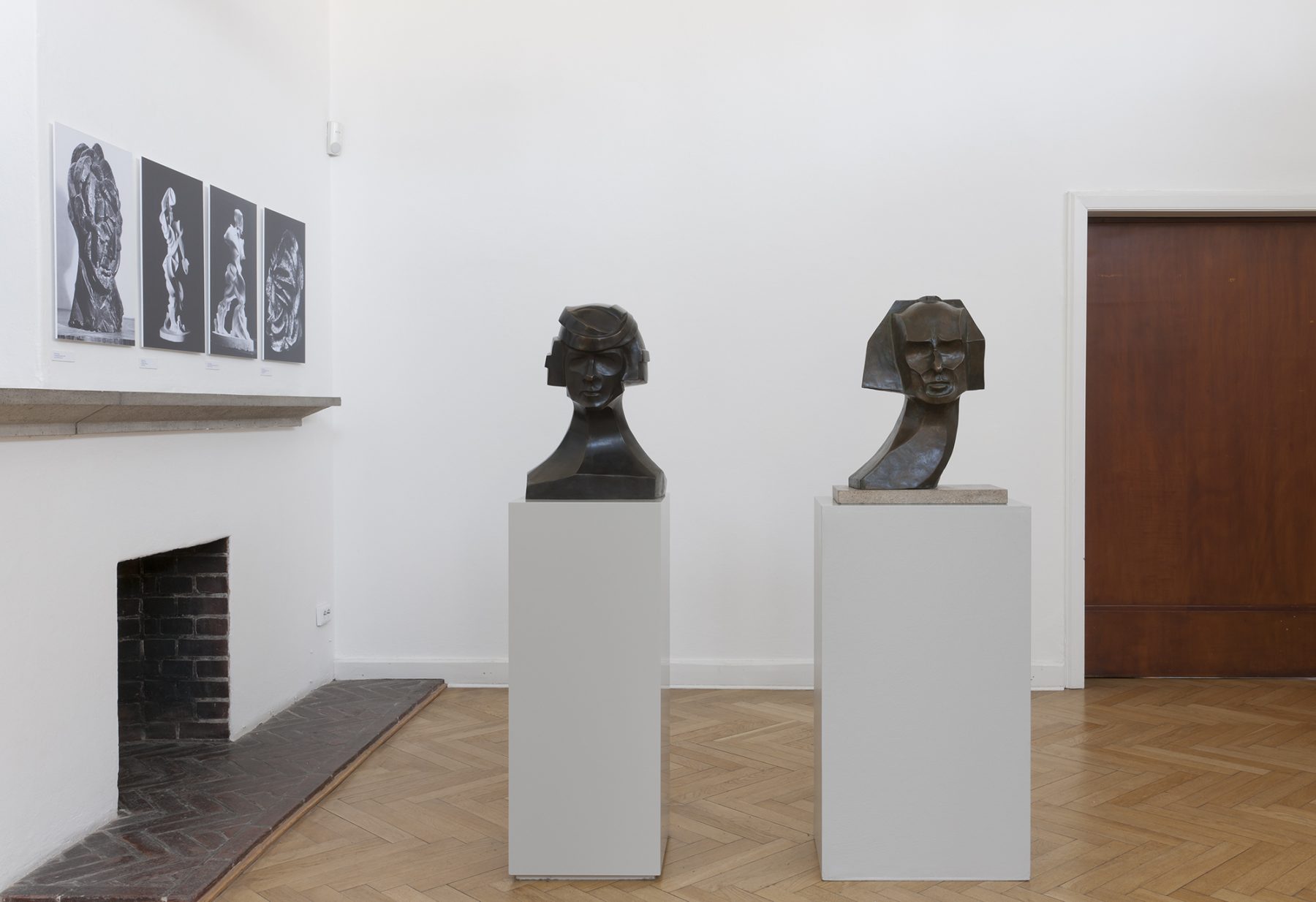
The sculptural work of the Berlin artist William Wauer (1866-1962) is at the centre of the exhibition. He appeared as a sculptor and painter in Herwarth Walden’s legendary avant-garde gallery ‘Der Sturm’ in Potsdamer Straße from 1916, having previously worked successfully as a theatre and film director, among other things. His sculptures are characterised by an angular, geometric abstraction and led to a completely new form of expression, particularly in the field of portrait sculpture. His most famous work, the bust of Herwarth Walden, has come to epitomise the formal radicalism of German modernism. In 1937, Wauer’s works were defamed as ‘degenerate’. In addition to the portraits, he created a large number of figures which, in the sense of a ‘rhythmically tamed dynamic’ (Wauer), are permeated by expansive lines of movement and have retained their formal relevance to this day.
In the years before, during and after the First World War, Berlin was an international hub of modernism, in which different trends and styles manifested themselves and overlapped with one another. The exhibition ‘William Wauer and Berlin Cubism’ examines the hitherto little-noticed influences of Cubism on the sculpture of the late imperial period and the Weimar Republic. The deliberately bold choice of the term ‘Berlin Cubism’ serves to uncover and visualise tendencies that were previously almost completely hidden under the term ‘Expressionism’ or were appropriated by it. For sculpture, French Cubism provided the essential impetus for a geometrised reduction of bodies to the basic forms of the cube, cylinder, cone and pyramid. But this is only one aspect. Another decisive factor in the transfer of cubist means from painting to sculpture was a new understanding of space with regard to a fully sculptural unfolding and penetration of surfaces, masses and surrounding space. The ‘cubic’, as already discussed in the German art dialogue in the context of archaic and non-European sculpture, was an essential formal point of reference for the avant-garde sculpture of the era.
In this sense, in his book ‘Der Geist des Kubismus und die Künste’ (The Spirit of Cubism and the Arts), published in 1921, ‘Sturm’ contributor Rudolf Blümner even gave William Wauer a pioneering role in the formulation of Cubist sculpture. Although this is not correct from an art historical perspective, such an assessment documents the contemporary point of view, which can also be applied to other artists of the era. This applies above all to the works of Berlin-born Rudolf Belling and the Ukrainian sculptor Alexander Archipenko, who was one of the first artists in Paris to take up the formal innovations of Cubism and was exhibited several times in the ‘Sturm’ by Herwarth Walden from 1913 onwards. He lived in Berlin from 1921 to 1923 before emigrating to the USA. Edwin Scharff also experienced the main artistic influences in Paris and subsequently changed from a Cubist painter to a Cubist sculptor. Cubist influences can also be seen in the works of Oswald Herzog, Johannes Itten, Otto Freundlich, Herbert Garbe, Katharina Heise, Walter Kampmann, Georg Kolbe, Georg Leschnitzer, Marg Moll, Emy Roeder, Richard Scheibe, Kurt Schwitters, Hans Uhlmann, Jenny Wiegmann-Mucchi and the architects Walter Gropius, Max Taut and Wassili Luckhardt, who also worked in sculpture.
Many avant-garde sculptures from this period did not survive the Nazi iconoclasm and the destruction of the Second World War and have only survived in photographs. In addition to sculptures, picture panels will therefore also introduce visitors to the formal world of ‘Berlin Cubism’.